
Supreme Court Tariff Ruling: Key Takeaways for Investors

.png)

|
After nearly a year of trade policy uncertainty, the Supreme Court's ruling that recent tariffs are unconstitutional has reset the policy landscape. Yet, as is often the case in Washington, when one chapter closes, another opens. President Trump has already signaled a switch to an alternative legal framework for tariffs, and markets are still digesting what this means for trade policy, corporate earnings, consumer spending, and investment portfolios. For investors, the most important takeaway is not the legal ruling itself, but what the past year shows about the importance of staying invested. While markets can experience swings during periods of policy uncertainty, they can also stabilize and recover when investors least expect it. Tariffs will likely continue to drive headlines, so having a clear understanding of the events of the past year can help long-term investors maintain perspective as the next chapter unfolds. A year of tariff volatility
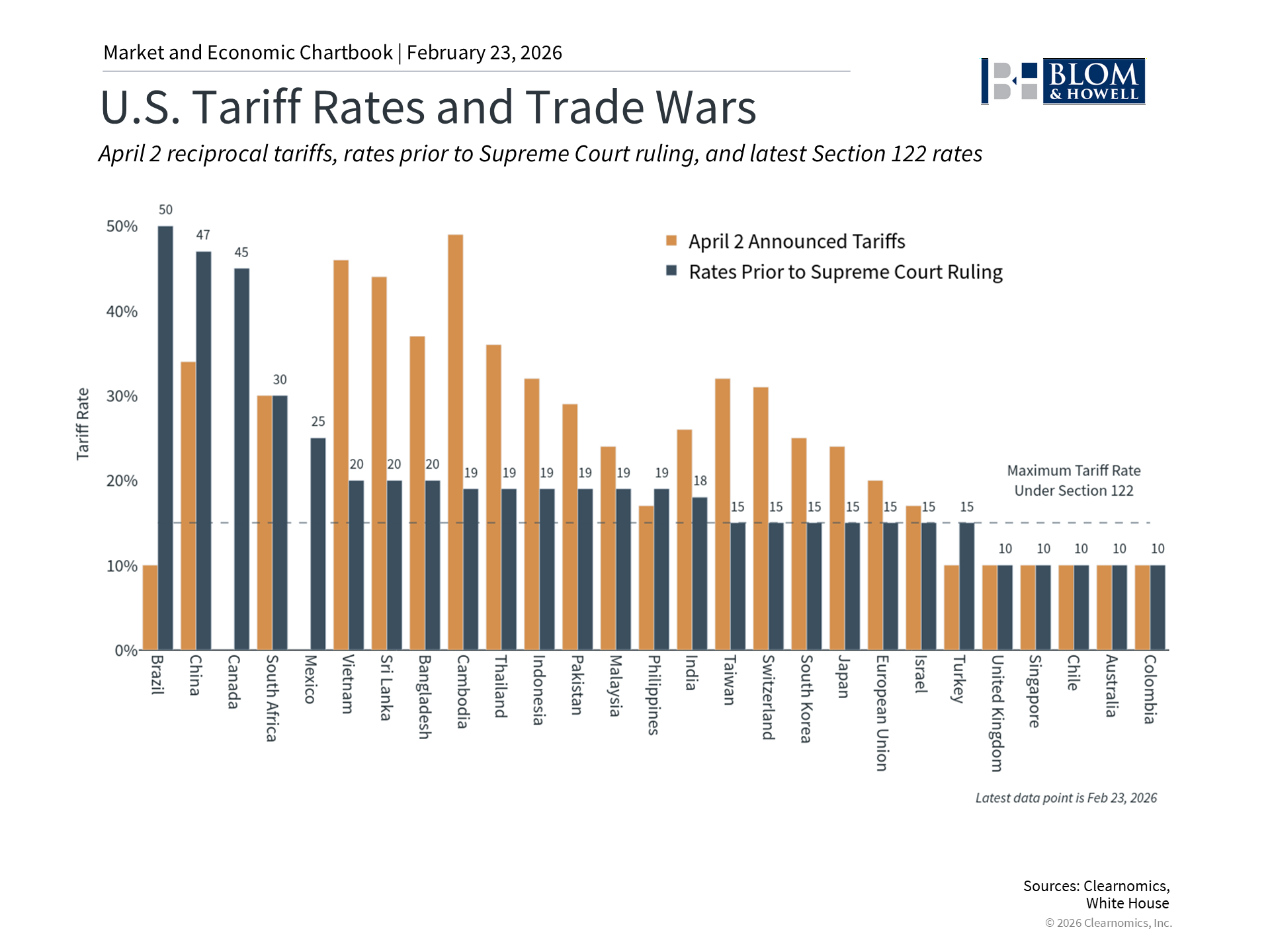
To understand the implications for investors, it helps to understand what this ruling means. Presidents have several legal tools available to impose tariffs, each with different rules around rates, duration, and scope. The reciprocal tariffs announced on “Liberation Day” last April were justified under the International Emergency Economic Powers Act, commonly known as IEEPA. This law from 1977 grants the president broad authority to regulate commerce in response to a declared national emergency. In this case, the stated emergency was the country’s persistent trade deficits with many nations, illegal drug trafficking, and immigration. Here is a summary of the main events: • On April 2, 2025, the initial announcement included a baseline 10% tariff on virtually all trading partners, with higher country-specific rates layered on top. The immediate market reaction was sharp, resulting in a correction across major indices. Perhaps more importantly, investors feared that tariffs would fuel “stagflation” since tariffs could push inflation higher and economic growth lower. This would be a scenario that historically has hurt both stocks and bonds. • Then, on April 9, 2025, the administration announced a 90-day pause on the country-specific increases, leaving only the baseline rate in place. The markets began to rebound almost immediately, and rose to new all-time highs in just months. Trade deals were subsequently made with individual countries and regions. • On February 20, 2026, the Supreme Court ruled that the administration lacked the authority to impose sweeping global tariffs under IEEPA. The ruling reaffirmed Congress’s central role in setting trade policy. Tariffs are unlikely to go away
The administration has been aware of the possibility of this ruling, and it has been widely explored how tariffs could be passed without IEEPA. So, following the Supreme Court ruling, the administration quickly implemented tariffs under a different law, Section 122 of the Trade Act of 1974. This law was chosen over other options because it can be used against a number of countries at once, and does not require long investigations and reports that could take months. Specifically, Section 122 allows the president to impose tariffs of up to 15% for a period of 150 days, without requiring Congressional approval. The spirit of this law was to allow presidents to respond to trade imbalances and threats without completely bypassing Congress. Historically, when the dollar was still backed by the gold standard, there were periods when this law was needed to protect the dollar. This means that although some of the higher tariff rates introduced in 2025 may be rolled back, and the new tariffs may not last more than several months, tariffs are likely to remain an active policy tool. Businesses and investors should expect continued uncertainty around tariff levels and ongoing negotiations with individual countries. There are other areas of uncertainty, including if and how refunds will be made. Courts must still determine whether businesses that paid tariffs under the IEEPA framework are entitled to refunds, and whether individual Americans would be included in any reimbursements. In the worst case, it could be years before there is clarity. Still, for businesses and consumers, the possibility of refunds represents a potential boost to corporate earnings, capital investment, and disposable income. The economy does not always follow textbook theory
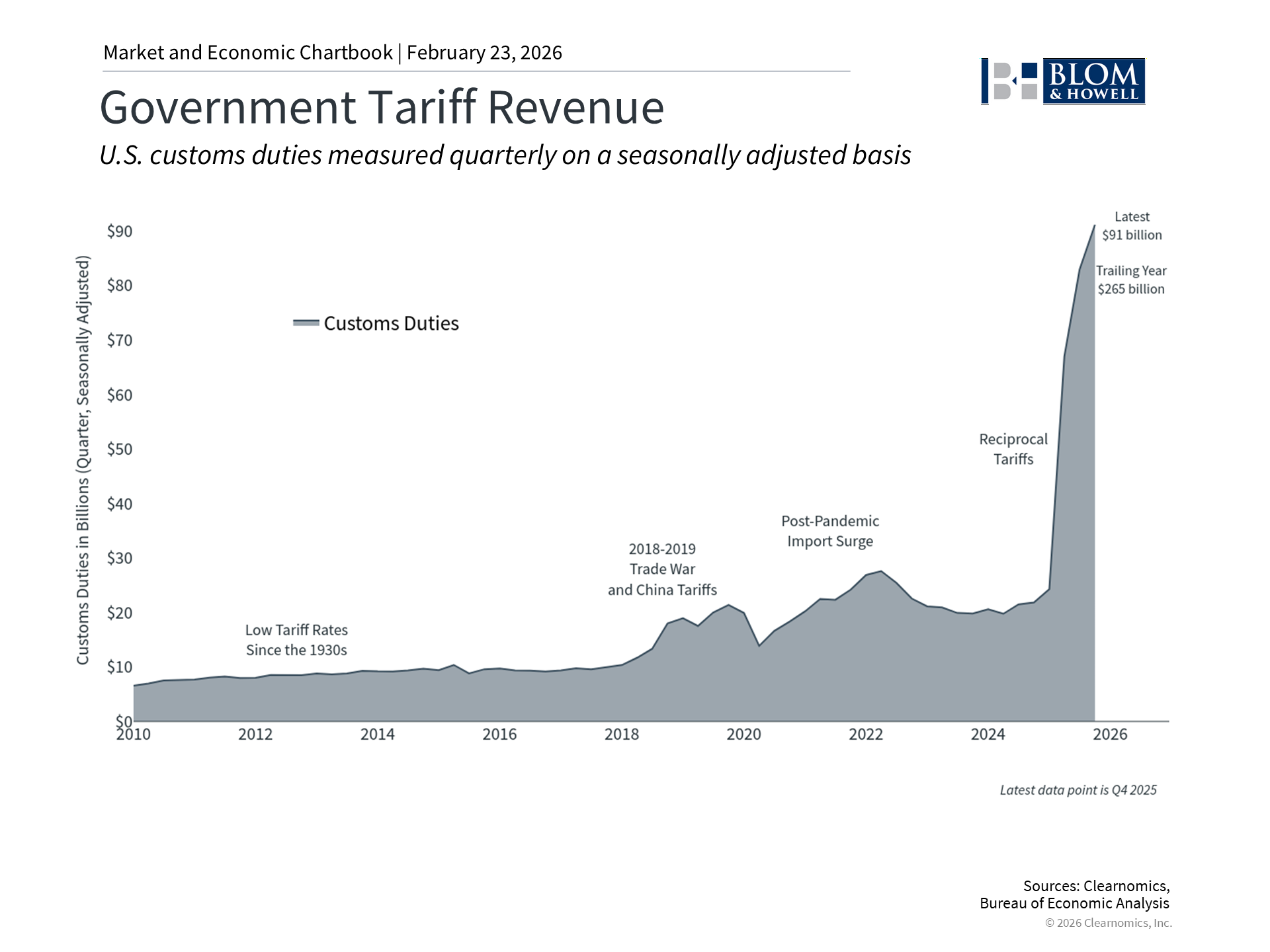
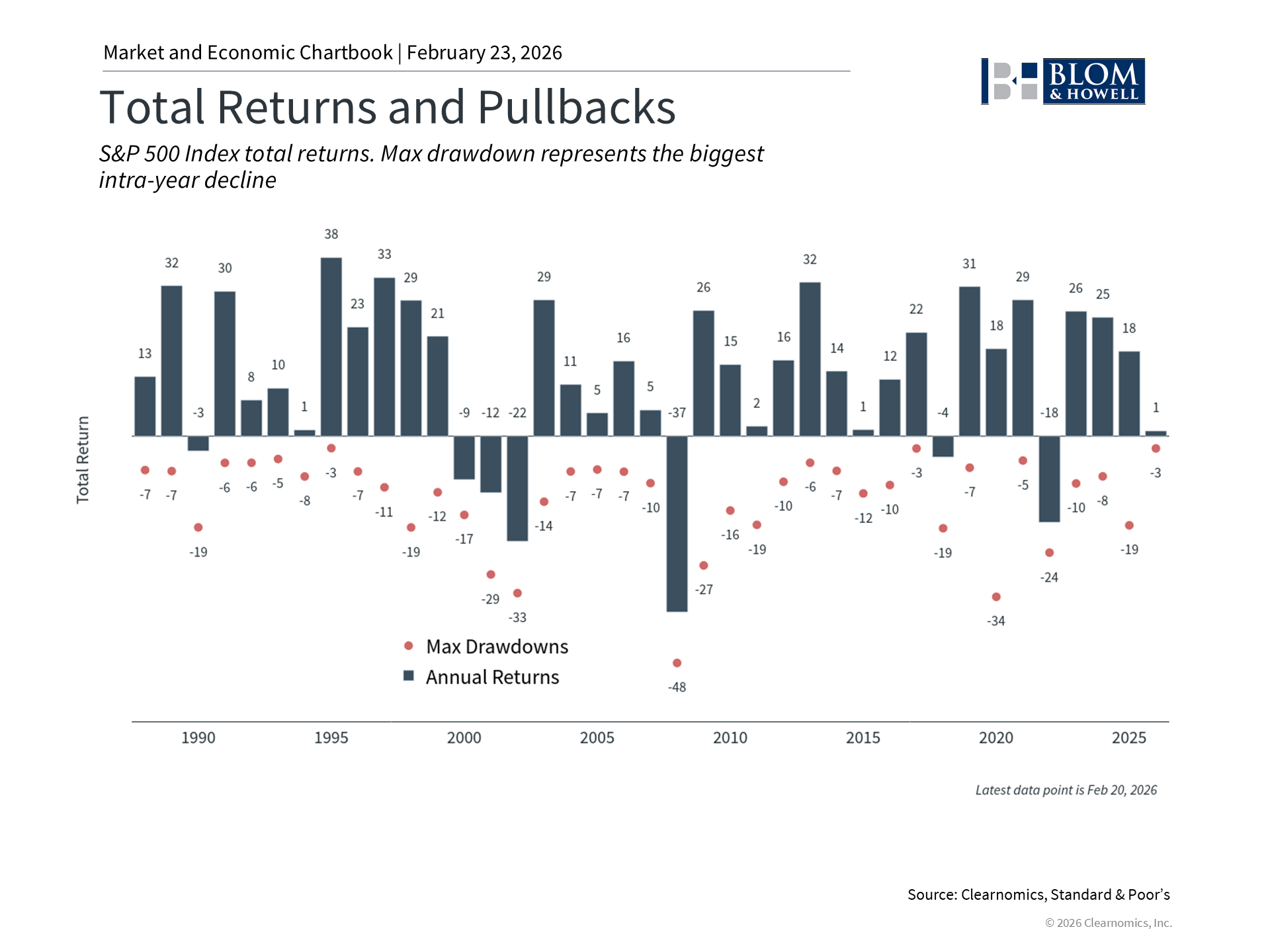
Economics is sometimes called the “dismal science” since it has a poor track record of predicting the response to major policy shocks. When tariffs were raised to their highest levels since the Great Depression, many feared demand destruction, rising inflation, a strengthening dollar, and struggling markets. Why did this not fully materialize? First, the level of tariffs changed quickly and repeatedly. The 90-day pause announced just one week after Liberation Day dramatically reduced the effective tariff burden on most trading partners. The highest announced rates never truly went into effect except with a few trading partners. Second, companies responded by stockpiling imported goods well ahead of the April deadlines. This was clearly visible in the trade data, which showed a significant spike in imports in the first quarter of 2025 as businesses front-loaded purchases. This meant that the immediate inflationary impact was cushioned, at least temporarily. Third, and perhaps most importantly for markets, the underlying fundamentals of the economy remained solid. Inflation has continued to moderate, with the Consumer Price Index rising just 2.4% year-over-year in January 2026. Real GDP grew at a modest but healthy 2.2% pace for all of 2025, according to the latest report from the Bureau of Economic Analysis. Corporate earnings continue to be strong as well, supporting valuations and long run growth. Of course, this is not to say that tariffs had no impact. The federal government collected hundreds of billions of dollars in tariffs which were paid by both consumers and businesses. But the experience of the past year is a reminder that economic outcomes are rarely as straightforward as the headlines suggest, and that is why it’s important investors do not react to worst-case scenarios. The clearest lesson from the past year of tariff volatility is one that applies to virtually every period of market and policy uncertainty: by far the best thing investors could have done was to stay invested. Trying to predict the precise effect of tariffs on the economy and markets is not only difficult, but counterproductive. As the accompanying chart shows, years with significant intra-year pullbacks have very often still ended with positive returns. The bottom line? It’s important to separate political views from portfolios and financial plans. Trade policy, legal battles, and political debates are important for taxpayers and voters, but they often lead to the wrong investment decisions. The history of markets shows that economic fundamentals, corporate earnings, and investment principles matter far more to achieving financial goals. |
|||
|
Investment advisory services are provided by Blom & Howell Financial Planning, Inc. Copyright (c) 2026 Clearnomics, Inc. All rights reserved. The information contained herein has been obtained from sources believed to be reliable, but is not necessarily complete and its accuracy cannot be guaranteed. No representation or warranty, express or implied, is made as to the fairness, accuracy, completeness, or correctness of the information and opinions contained herein. The views and the other information provided are subject to change without notice. All reports posted on or via www.clearnomics.com or any affiliated websites, applications, or services are issued without regard to the specific investment objectives, financial situation, or particular needs of any specific recipient and are not to be construed as a solicitation or an offer to buy or sell any securities or related financial instruments. Past performance is not necessarily a guide to future results. Company fundamentals and earnings may be mentioned occasionally, but should not be construed as a recommendation to buy, sell, or hold the company's stock. Predictions, forecasts, and estimates for any and all markets should not be construed as recommendations to buy, sell, or hold any security--including mutual funds, futures contracts, and exchange traded funds, or any similar instruments. The text, images, and other materials contained or displayed in this report are proprietary to Clearnomics, Inc. and constitute valuable intellectual property. All unauthorized reproduction or other use of material from Clearnomics, Inc. shall be deemed willful infringement(s) of this copyright and other proprietary and intellectual property rights, including but not limited to, rights of privacy. Clearnomics, Inc. expressly reserves all rights in connection with its intellectual property, including without limitation the right to block the transfer of its products and services and/or to track usage thereof, through electronic tracking technology, and all other lawful means, now known or hereafter devised. Clearnomics, Inc. reserves the right, without further notice, to pursue to the fullest extent allowed by the law any and all criminal and civil remedies for the violation of its rights.

|
Posts you may like

Beyond the Headlines: Fed Rate Hikes and Long-Term Portfolios

Tariff Refunds and the National Debt: What They Mean for Investors


